

To Form a More Perfect Union (Reflections on the 4th from a Wesleyan Perspective)

In the past, on the 4th of July, I have reflected on the actual Declaration of Independence. This year, I chose the Constitution. I am struck by the stated reasons/motive/purpose for engaging in this grand experiment. “We the People” are called to:

FORM A MORE PERFECT UNION

As a Wesleyan Christian, the idea of perfection is compelling. Wesley was writing about this at the same time and there are connections. Perfection, in this context, is not about flawlessness. It is about wholeness. It is about unity and harmony. It is about love expressed with patience, kindness, and a humility that does not insist on its own way. Methodists are among those who are optimistic about this possibility – even in this life, by the grace of God. It may be one reason that we grew to be the largest Protestant denomination in the land within 50 years of the signing of this document. I wonder: Have we lost some of this optimistic commitment? What would renewal of this hope look like? How might we lead the way?

ESTABLISH JUSTICE

I like the distinction (or the spectrum) between retributive justice and restorative justice – with one concerned with accountability and punishment, and the other concerned with restoration and transformation. Can there be a “more perfect union” if we lean too far one way?

Justice has multi-dimensions. At one level justice is about protection of society and holding each other accountable. At another level, it is about being “just” and treating one another with the honor and respect of being equals. And at a deeper level, justice is the proactive work of lifting others up and cultivating conditions where all have opportunities to thrive. I love the line in our Book of Discipline that calls us to create social structures that are consistent with the gospel. That’s the work of justice. (It might help to think about justified words on a page. What would happen if the words where out of alignment, in terms of balance, harmony, and meaning?).

INSURE DOMESTIC TRANQUILITY

This sounds so nice – and so needed. How might we work towards this kind of peace? Too often peace is perverted into division. “You stay on your side; I’ll stay on mind; then we will have peace.” In the minds of the framers of the constitution and among people of faith, peace is more about coming together in harmony, not bubbled monotony; in unity, not uniformity. May we be instruments of peace.

PROVIDE FOR THE COMMON DEFENSE

With those who actively promote a posture of war rather than defense, I wonder if this needs some serious rethinking among “we the people.” I’ll just leave that there.

PROMOTE THE GENERAL WELFARE

A primary purpose of our shared ordering of things is to cultivate the welfare of all. In my mind, this involves working together to insure the meeting of basic needs. I want the people with whom I interact on a daily basis to be able to go to a doctor and to have eaten – for starters.

AND SECURE THE BLESSINGS OF LIBERTY TO OURSELVES AND OUR POSTERITY

I love the word blessings here, and the favor and goodness that comes from freedom. On this 250th anniversary, I also love the idea that we actively work for these blessings not only for ourselves but for those who will come after us.

In the context of defining freedom, we read in the scriptures: “If you bite and devour each other, watch out or you will be destroyed by each other.” That is what happens when we use our freedom for selfish indulgence, rather than to serve one another. We fall back into bondage (See Galatians 5:1, 13-15).

The Preamble to the Constitution gives us a beautiful outline of a much better way to use the freedom with which we have been blessed.

Happy Fourth of July!
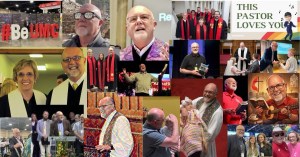
Memory Lane on this Last Day before Retirement (from Facebook on June 30, 2026)

This is hard! After 40 years, this is my final day of being a non-retired, appointed, “active” United Methodist pastor. I stood in the sanctuary and pondered, lamented, celebrated, and prayed that good fruit would come, somehow, from liturgies shared and words proclaimed. I drove by the hospital and thought of so many visits and prayers for healing grace trusting in God’s eternal love. I stood in the parking lot and gazed at the building we often call the church. So much energy was put into maintaining facilities in the hopes that God’s love would be discovered and cultivated, and that congregations would be inspired to do more than “maintain.” I laughed inside at the joyful thought of no longer worrying about whether the air conditioners would work on Sunday. “Not my problem,” as they say.

In doing some research last year, I was genuinely surprised to discover that I am the second longest serving non-retired elder in the Conference – and the longest serving elder from the former North Arkansas Conference.  I do wonder how that happened. I stand amazed at all that has happened through these years – and how much I have changed.  I am so blessed to have been (and continue to be) a part of this “partnership in the gospel,” to used Paul’s phrase. 

As I take a moment for reflection, I must mention several beloved congregations – Maple Lane (in South Bend Indiana), First Russellville, Gardner Memorial in North Little Rock, St. Paul in Fort Smith, Conway First, and Jonesboro First.  Serving as Pastor has been such an honor.  I reflect with joy on how these congregations experienced growth, in numbers and spiritually as well.  I am thankful to have been a small part of these blessings.   

I think of my home church – Western Hills in Little Rock. This is where I experienced my first call to serve in this way – and I wrestled with this call for a long time – and in many ways still do.

Much of my ministry – and calling – has been devoted to cultivating relationships and callings among pastors – through Connected In Christ, Course of Study, Local Pastor Licensing School, the Board of Ordained Ministry and dCOM.  This has brought much joy, and I love hearing the testimonies about the blessings of being involved in these endeavors. 

In CIC, we did not see ourselves as just another continuing education program. Our unique role was to facilitate the connections needed for faithful and fruitful ministry.  This ministry produced much good fruit – with statistics as a witness.  I do remember giving a presentation on the growth we were seeing through CIC congregations, and a colleague pointed out that there is a difference between correlation and causality.  Yes! But the hundreds of testimonies from clergy and laity were inspiring.  I do wish we could find a way to put energy into this kind of intentional and comprehensive effort today. 

If I could point to one thing as a highlight, it would be that moment at General Conference in 2024 when the word “incompatible” was removed from the Book of Discipline.  It still brings tears to my eyes every time I remember it.  It was an honor to work on this legislation, along with the work of strengthening our efforts to focus on virtues and callings that are life-giving to all –“fidelity, monogamy, commitment, mutual affection and respect, careful and honest communication, mutual consent, and growth in the grace and in the knowledge and love of God.”  What blessings might come if our ministry focused on the cultivation of these values for all?

And now to share a disagreement with the Book of Discipline – and we can do that and still be among the beloved.  Repeatedly the BOD describes clergy status within the Conference as either “active” or “retired.”  I don’t like this.  In good Wesleyan fashion, I want both/and.  I want to be active.  I want to serve.  I want to continue to write and publish, teach and preach, and be a part of the ordering of the life of the Conference for faithful and fruitful ministry – as an active and retired member of the clergy. 

Most of all I want to stay active in the calling that I have been given, echoed in the words of the Apostle Paul – to bear one another in love, with patience, kindness, and a humility that does not insist on its own way. Again, this is hard and life-giving. To do this, I want to continue to be a part of this “partnership in the gospel,” trusting in the blessings of much forgiveness and grace.