Thoughts on Transformation and Truth (sparked by a handwritten sign)

As we arrived at worship, there was a man standing on the corner of our property with a two-sided handwritten sign.  One side said, “Trans Women are Men.”  The other side said, “Repent or Perish.”  Needless to say, this was upsetting to many.

When I hear this targeted message – in the name of the gospel – my heart goes out to some people that I know.  For one example, I think of one dear soul in the church who was born as a male.  Few knew this.  To most she was known as a sweet woman in the church who sang in the choir and served in the food pantry and shared the love of Christ.  I suspect that there are persons with similar stories in many congregations, and they have had to live in fear while wanting to be faithful.

I am grieved when people come to church and have to encounter bigotry in the name of righteousness. (And to be clear, I define bigotry, with the words of John Wesley, as an extreme attachment to one’s own party, opinion, or religion to the point of causing bitterness and division, often while thinking that they are in service to God).  It is hurtful when beloved souls are targeted and used to promote other agendas. I think of the Greek word “pornia,” which can be defined as the objectification of persons so that they can be used for our pleasure and purposes.  As I read the scriptures, those who engage in such practices are not giving witness to the kingdom of God.

When it comes to repentance and the dangers of siding with that which leads to death (the other side of the sign), we all need to start by looking in the mirror.  In this act of repentance, God will open the way to God’s forgiving, life-giving, eternal love.  This love does have the power to transform us, into the image of Christ – but let’s focus on the right things (II Cor 3:17-18). The hope is that we would be transformed from an eagerness to divide and judge to an eagerness to hold one another in love, with patience, kindness, and a humility that does not insist on its own way. The hope is for a transformation from “arrogance of spirit” to a desire for “unity of spirit.”  The hope is to give witness to the God and Father “of all, who is above all, and at work through all, and in all” – a big God. (See I Cor 13:1-8; Eph 4:1-6; Col 3:12-17; Rom 12:1-18, just to start).

May this experience give us the courage to be bold in our witness – as a congregation and as individuals.  Many beloved souls in our community need those willing to stand with them in a time when the lies of division, judgement, and objectification are being masqueraded in such obscene ways as truth (Aletheia -that which opens the way to what is life-giving and glorifies God).  

Just recently, for another instance, we have had people take fragments of curriculum that we have used and weaponize it by telling lies about what is being taught.  And before we judge too harshly, know that we all need to pay attention. It is so easy to be tempted by the “father of lies,” to borrow a term from Jesus. Jesus uses this term in a conversation with religious leaders claim that God is on their side and who call Jesus is a “Samaritan” (it is not a compliment) with a demon in him (John 8:39-59). Promoting faith in that way is the opposite of truth.

May we be among those who live into the words of the Creed, that we proclaimed last Sunday,  as those “kept in perpetual remembrance of the truth of Christ,” a truth found in a God “whose mercy is over all his works,” a truth that “manifest itself in the service of love” (as defined above), a truth “set forth in the example of our blessed Lord, to the end that the kingdom of God may come upon the earth. Amen (may it be so).”

Published on my Facebook page as well

Wesley on Human Sexuality (and his commentary on often cited verses)

Certain passages keep coming up in our conversations about human sexuality and the future (and possible division) of the church.  Since Wesley’s notes on the New Testament are a part of our doctrine, it might be good to know what he has to say.

One verse from Matthew 19 is often quoted to make a point about marriage. In this passage, Jesus speaks of marriage between one man and one woman, and how the two become “one flesh.” In context, this is an answer to a question about divorce.  The law of Moses gave “men” permission to dismiss a wife for most any cause. Jesus says that this is because of our hardness of heart and calls “men” to a higher standard, with some arguing that this call was given to provide more protection for the wellbeing of women. While Jesus honors this form of marriage in his illustration, the point of his answer, as Wesley says, is not about marriage; it is to speak against two things: polygamy and divorce.

And then things get very interesting. Even after lifting up this high standard, Jesus makes it clear that he is not giving a new law to be enforced. He tells us that not everyone can accept this, but only those who are given the ability to accept it.  Jesus shifts the conversation to those who are not called to marriage in this traditional sense. In this context, he speaks of eunuchs – some who are born this way, some who are made this way, and some who choose this way to glorify God.  The term “eunuch” was used in the ancient world as a euphemism for those who we might call “gay” today. Wesley does not make this connection directly but does tell us that we cannot always take this term literally.  He speaks of those who are eunuchs “by natural constitution, without their choice: to others by violence, against their choice; and to others by grace with their choice.” This is remarkable language, with much to ponder. (Also see notes on Acts 8:27, I Cor 7:7, and Dan 1:3). 

Jesus ends this challenging passage by saying, “Let anyone accept this who can.”  It is with this word that Jesus offers his teaching on marriage, divorce, and the honoring of those who do not, or cannot, enter into a “traditional” marriage.  These are all complex matters that call for much grace.

Next, we turn to verses within the first chapter of Roman that are often cited (Romans 1: 26-27). Wesley points out that this passage is about “abominable idolatries,” where people exchange the truth of God for a lie and worship the creature rather than the creator. The illustration is used of men and women exchanging what is natural for them for what is unnatural for them. From our perspective today, we might say that this is not healthy for any of us.  Whatever else we might say, the illustration is not the point or purpose of the passage.  It is about idolatry that leads to “the vilest abominations.” Wesley lists these abominations in his commentary – Injustice, Unmercifulness, Maliciousness (“a temper that delights in hurting others.”). Whispering (to “defame others.”) and Backbiting (speaking “against others behind their backs.”).  

In terms of sexuality, Wesley puts “fornication” on his list. The Greek word is “pornia” which can be defined as any sexual expression which objectifies self or others. As Wesley says, it is a term that “covers every species of uncleanliness.” By this understanding, this term includes much more than our common definition. In his notes on this passage as a whole, Wesley emphasizes the point that Paul is trying to make.  If we judge others, we only condemn ourselves (Romans 2:1).  This passage is about so much more than what we like to focus upon.   

Next, there are two other passages in Paul’s letters that are often cited, I Corinthians 6:9-10 and I Timothy 1:8-11.  In both of these passages we find a list of vices that do not represent the kingdom.  More specifically, we see a list of certain types of people who “will not inherit the kingdom of God” – as if they deserve it apart from God’s amazing grace. The lists include idolaters, fornicators, adulterers, male prostitutes, sodomites, thieves, drunkards, revilers, robbers, murderers, slave traders, liars, perjurers, and all that is contrary to sound teaching.  

The word translated as “male prostitute” in the NRSV, literally means “soft.” In Wesley’s bible it was translated as “effeminate.” This same word is used in the gospels to compare the “soft” or “luxurious” clothing worn by those in royal palaces with the clothes worn by John the Baptist (Mt 11:8; Lk 7:25).  In reference to sex, there is a history of this word being used to describe the passive partner, the effeminate (which was seen as a vice by many). In his notes, Wesley describes those “who live in an easy, indolent way; taking up no cross, enduring no hardship.” It is clear that Wesley saw this in a broader way. In other contexts, Wesley uses this same word in a positive light. He calls for a “softening of the heart” and for a “soft and yielding spirit.”  In his commentary of the phrase “Love is kind,” he describes “kindness” with the word “soft.” He also says that peacemakers are those who “quiet turbulent passions” and “soften the minds of contending parties.”  Being “soft” can be a good thing.

As a part of his commentary, Wesley does allude to the common use of this word to describe a particular kind of person. He asks, “How is this? These good-natured, harmless people are ranked with idolaters and sodomites!”  Whoever he has in mind, he struggles with them being on this list. To make sense of this he speculates that we must all guard against sins thought to be the least in order to secure ourselves from the greatest sins. With all of this, it is clear that Wesley sees this notion of “being soft” is a broader context, beyond sex alone, and he also calls us all to look in the mirror. 

The next word on this list is even more challenging. Translated as “sodomites” in Wesley’s day, it is a combination of two words, one meaning “male” and the other meaning “bed.” While very rare in ancient literature, it is mostly seen as a reference to abuse and exploitation of another. In some contemporary translations, it is used to denote the active partner in a same-sex (male) intercourse. In the history of translation, it has also been associated with pedophiles or abuse of boys or children (This is how Luther, for example, translated it).  There is evidence that Wesley defined this word in ways that move beyond sex. In Wesley’s notes on Ezekiel 16:49, he says that the sin of Sodom was “fullness of bread,” “excess in eating and drinking,” and Sodom’s refusal “to help strangers.”  Arrogance, gluttony, and laziness in helping the poor was the source of their fall. Following the message of the prophets, Wesley wants to remind us that “Their doings were abominable, but thine have been worse.” (Note on Ezekiel 16:47).  In other words, when we see this word, we cannot only think of “those people.”  On the whole, this term is used in the context of exploitive, abusive, neglectful, selfish, and harmful behavior, often seen in the context of sexual relationships.

In the last century, this word was sometimes translated with the term “homosexual.”  It is worth noting that this 20th century term was used to denote an official mental disorder.  It was often used to suggest practices that we would all consider “incompatible with Christian teachings.”  The American Psychiatric Association did not fully remove this classification and these associations until 1987.  Because of these associations, we have been asked to stop using this term. It is hurtful and undermines the hopes for a life of faithfulness and love found in many who might be labeled in this way.

According to Wesley, we are to interpret all scripture, especially challenging scriptures, through the grand truths that run through the whole, using passages that “take hold of our conscience.” (See note on Romans 12:6 and Sermons “On Charity and “On Laying the Foundation”).  Jesus himself used this method when he gave us the great commandment to love and called this the summary of all the law and the prophets. Wesley calls this love the “chief of all graces” and the “royal law.”  In addition to the Great Commandment, Wesley also turned to passages like I Corinthians 13 and I John 4 to serve as a lens through which to interpret the whole and be able to “rejoice in the truth.”  These passages express the “grand truths that run through the whole.”  

It is worth noting the connection between love and truth. Biblically speaking, truth is that which reveals God’s love and makes it known. The word itself means “to reveal” or “uncover.” Truth is not rooted in the law. In fact, sometimes the law covers up the truth.  Jesus himself dealt with this. Truth is revealed by love that is patient and kind and does not insist on its own way (I Cor 13:4-7). It is this love that invites all of us to struggle with our own perspectives and prejudices and to be transformed, from one degree to another, into the likeness of Christ. By the practice of this love, truth is made known through us. That is the Wesleyan way.   

 In my mind, Wesley’s willingness to struggle with these texts gives us permission to do so as well. His commentary opens the way for us to acknowledge that we do not fully understand matters of sexual orientation and identity and thus can approach such matters with less judgment and more compassion.  At the same time, we can affirm a strong sexual ethic rooted in the values that are life-giving for all – faithfulness, commitment, and all virtues summed up with the word “love.”  We can focus on these biblical values for all, rather than setting some aside by a different standard.  In this light, it is worth noting that Wesley consistently defined holiness with the virtues of patience, kindness, and humility.  May we all aspire to this kind of holiness and to the call to love one another well.

Caught Sleeping (as we wait for General Conference)

Here are some quick responses if you ever get caught sleeping on the job. “They told me this might happen after I gave blood this morning.” Or, “I wasn’t sleeping; I was meditating on our mission statement and envisioning new possibilities for implementation.”  Or my favorite, “In Jesus name, Amen.”

After devoting attention elsewhere in the midst of a pandemic, I have recently been reawakened by renewed conversations about the future of the UMC.  I’ve also discovered that some have been wide awake all along.  This week, I watched a presentation by Tom Lambrecht, from the WCA, that was very similar to a presentation given in Arkansas last year.  In this one, however, there were more details about the start of a new denomination, with or without the approval of the next General Conference, and included strategies to invite whole annual conferences to join.  Can you imagine that coming up at Annual Conference? 

The narrative is alarming – and wakeup worthy.  In this narrative, matters of sexuality are only the “presenting issue.” The real issue is that too many no longer see the bible as God’s self-revelation but see it as “a record of human encounters with God,” as “helpful but not authoritative.” With each step, we are warned against those who see the quadrilateral as “four equal sources of authority.” We hear of those who do not want to limit marriage to two people, ignoring the fact that the plan mentioned uses the word monogamy repeatedly. Adam Hamilton is misrepresented as an example of one who “knows good Christians who are gay” and thus “elevates experience over scripture.”  The conclusion is this: the faithful simply cannot stay in a church where so many “discount biblical teaching in favor of human experience and give priority to cultural values over scripture.”

As I listened, I wondered who was being talked about. The people I know, who are being lumped into this category, would agree that scripture is primary and authoritative.  Their convictions are deeply rooted in scripture, believing that faithfulness calls us to move beyond proof-texting and invites us to follow the method of interpretation that Jesus used when he summarized all the law and the prophets through the lens of love.  It is attention to scripture that motivates a desire to make room for all, including those with traditional, centrist, and progressive perspectives.  It is a deeply rooted faith in Jesus Christ that leads many to seek unity in love rather than uniformity by law.  And in the light of the “presenting issue,” and the harmful rhetoric around it, many feel an explicit need to affirm our LGBTQ+ siblings and to honor the gifts they bring. In this light, there is a need to promote a sexual ethic rooted in the life-giving values of the gospel rather than judging people by how they personally identify themselves.

To characterize these commitments as giving priority to cultural values over scripture is unfair and hurtful.   At best, this characterization involves the fallacy of hasty generalization or the taking of an isolated or extreme example and using it to cover others; at worst it is an intentional lie to vilify and mislead!  Of course, if schism is the goal then looking for good in the other is probably not a good idea.  With this goal, we may not want to start with common ground.

Friends, the alarm is going off. At one of these meetings in Arkansas, available on the WCA Facebook page, a pastor said that the most important vote of our lifetime is coming, that small churches will be the key to success, and that funds are available to help pay expenses to help delegates get to Annual Conference when the time comes.  Do we need to wake up?  Do we need to resume the work of cultivating a different narrative? The option may be waking up and finding ourselves in a new denomination. 

Reclaiming Tradition (from the traditional plan)

IMG_4577I must say, at Conway FUMC (and this is true of much of Methodism), we are so traditional! In fact, we are more traditional than many who accuse us of violating tradition. I believe we need to reclaim this word and, to do so, we must understand more deeply what it really means.  At Annual Conference, we heard Dr. Greg Jones, the Dean of Duke Divinity School, define tradition as “the living faith of those who have gone before us rather than the dead faith of the living.” That’s a good place to start if we are to reclaim the word “tradition” from recent abuse.  We can either use tradition to protect what is comfortable to us or we can add our witness to the living tradition and give creative expression to God’s continuing work in our lives, building upon the blessings that have been passed on to us.     

First, our worship is rooted in tradition. We honor the living tradition of the holy and catholic Church through liturgical seasons, historic prayers, hymns, and creeds – even in our contemporary services. We firmly believe that planting ourselves in the living tradition of the church is key to both faithfulness and fruitfulness. Without this rootedness faith becomes shallow and small.

Secondly, we have a very traditional view of scripture.  Our view is so traditional that we acknowledge that the church formed the Holy Bible, selecting the “standard texts” from many options. In other words, tradition gave us the Bible as we know it.  We are blessed that our tradition did not give one uniformed perspective.  We have four gospels and multiple forms of writings, all with diverse theological perspectives, and written in different contexts.  Taking the scripture seriously, we avoid the immature practices of proof-texting and selective literalism that are so popular among those who focus on using tradition to protect what is comfortable to us. We honor the whole while giving weight to key text that help us interpret the whole – even as Jesus used this method when he summarized all the law and the prophets with the word “love.” Led by the Holy Spirit, we are called to struggle together with the tensions found even within the scriptures themselves.  In this struggle we discern God’s will for our time and, most importantly, learn how to love.  That’s what it means to be part of the living tradition of the body of Christ.

Next, we make the important distinction between the living tradition of the church and our human traditions, which can easily become idols or false gods.  The living tradition of the church leads us into God’s truth.  In the scriptures, this truth is defined relationally.  Truth “reveals” or “discloses” what is good and life-giving (That’s what the original Greek word means).  Biblical truth is found in virtue more than opinion. It is revealed, or hidden, in how we treat one another.  In the Wesleyan tradition, truth is truth only when it is united to “humble, gentle, patient love for all.” Lies, on the other hand, hide goodness and conceal love.  Spiritual lies cultivate division, judgment, self-protection, and fear, and can be made to sound holy.  That’s what happens when we substitute the living tradition with our little traditions designed to actually hide us from God’s truth. 

A great irony about truth and lies occurs when some are accepted in the church only when they are willing to keep parts of their identity hidden. There are those among us who want them to lie about or “hide,” for example, who they love when the living tradition calls us to “bring to light” how we are all called to love – with faithfulness, forgiveness, patience, humility, and kindness.  There are those who want to focus on outward manifestations rather than illuminating the deeper truths of the gospel to which we are all called.  Jesus had a lot to say about this kind of white-washed righteousness. 

The plan passed at the last General Conference is called the “traditional plan.”  With mandates to exclude, punish, and strengthen rules that harm, I do not believe this plan honors the living tradition of the church.  Drawing upon a description from the Judicial Council, I would suggest that we call it the “inquisitional plan.”  That is much more fitting.  I’ve also heard it called the “mean plan.” The unintended blessing of this plan is how it has caused the truths of the gospel to come to life in the hearts of so many.  May this enlightening continue.  May we honor the living tradition of the church.

Scripture, Wesley, and the Way Forward (Part One in a Series on Wesley and the Way Forward)

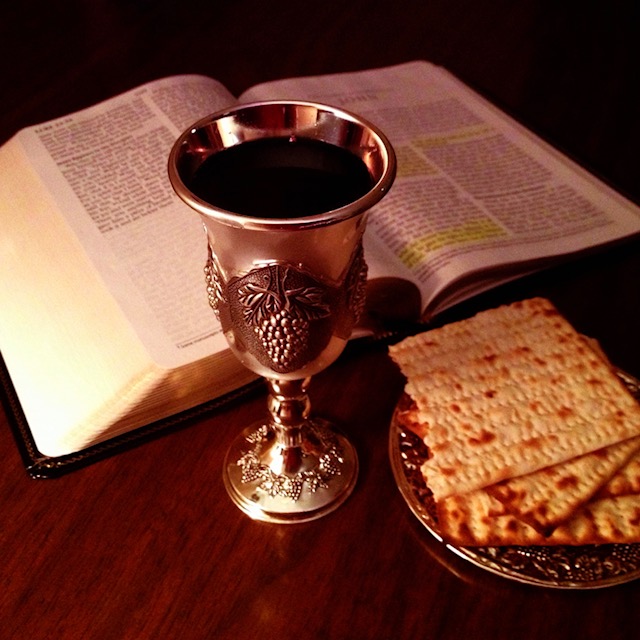
pic- bible and communionWhat about the Bible? What about Wesley?  These are important questions in the midst of our struggles, as a denomination and as a congregation, around issues of sexuality and the future of the church.  As a follow-up resource to our conversations on the “Way Forward,” this paper is an attempt to put my perspective on these questions into written form. While there are other texts, the focus here is on key New Testament passages, with some comments on what Wesley had to say about them, and then followed with some questions to lead us into our next gathering.

Perhaps the most important New Testament passage for the debate on homosexuality is found in the first chapter of Romans, specifically vs.26-27.  From this passage, and others, many claim that same-sex intimacy, in any form, is a distortion of the God’s intended purpose and design for us.  For this argument, we can go back to Genesis 1:27 where we read, “Male and female, God created them.”

At the same time, we must note that these verses in Romans are given within the context of a larger statement about idolatry. We are told that idolatry results in us exchanging the truth of God for a lie and worship the creature rather than the creator. The word Idolatry starts with “I.”  It is the effort to manipulate spiritual forces to get our own way.   In the culture being addressed by Paul, rituals involving sex were common ways to engage in this manipulation.  Paul uses “unnatural” intercourse as an illustration.  And the Paul follows this illustration with a long list of “unnatural” acts that are against the will of God, including envy, strife, deceit, craftiness, gossip, insolence, and boastfulness (v.28-31). These acts and attitudes point to a disorientation of life and estranged from God.

This list also provokes a critical question: “Is there anyone not on this list?”  The answer must be “no.” We are all in need of grace.  Apart from God’s grace, we will bring despair and destruction. Furthermore, it would be a disservice to Paul, and to the Word of God, to not read this passage to its conclusion.  Paul conclude this passage by saying: “Therefore you have no excuse, whoever you are, when you judge others; for in passing judgment on another you condemn yourself, because you, the judge, are doing the very same thing.” (2:1).

As United Methodists, it is important to note what John Wesley says about this in his “Notes on the New Testament,” which are part of our doctrine.  He speaks of the “heathen Romans” and the “emperors themselves,” being given us to “vile affections” and “unnatural lust.” He points out that this passage is about “abominable idolatries” where God gives us over to the “vilest abominations.” The word abomination literally means to go against our nature as those created in the image of God.  And then he lists these “vilest abominations” — Injustice, Unmercifulness, Fornication – “which includes every species of uncleanliness,” Maliciousness – a temper that delights in hurting others, Whispering – to defame others, and Backbiting – speaking against others behind their backs. In his notes of this passage, Wesley emphasizes the point that Paul is trying to make.  If we judge others we only condemn ourselves.

Here are some inferences to be made regarding the issue at hand. First, same-sex sexual relationships are used as an illustration to make a larger point.  To turn the illustration into the main point is a hasty generalization that dishonors the intent of the passage.   Secondly, the point of Paul’s argument is that we all fall short and should not single some out for judgment.  Thirdly, from the context it seems that what is being opposed is forms of idolatry and acts that lead to “exchanging the truth of creator for the worship of the creature.” It can be argued that it is not a prohibition of intimacy between two committed people wanting to express love in the way that is natural for them, but rather about an insatiable lust that leads to excessive, dangerous, and even abusive sexual behavior, even to the point of (what we would call today) heterosexuals “exchanging” their natural proclivity and engaging in homosexual encounters.

For one more inference here, the tenor of this passage suggests that we focus on the actions that bring harm to us all and provide “means of grace” to address them together, rather than projecting onto others and how they need to change.  In Wesley commentary on this passage, “fornication” is the only one mentioned that involves sexual expression. In other Notes, Wesley uses this term as a cover term for all acts of sexual immorality. The Greek word is “pornia.” It may be defined as sex when another is objectified or objectifies themselves and allows themselves to be abused.  What if we were more focused on providing help with this?

There are two other passages in the New Testament to which people often turn, I Corinthians 6:9-10 and I Timothy 1:8-11.  In both of these passages we find a list of vices that do not represent the kingdom.  More specifically, we see a list of certain types of people who “will not inherit the kingdom of God” — not apart from God’s amazing grace. The list includes the idolaters, fornicators, adulterers, male prostitutes, sodomites, thieves, the greedy, drunkards, revilers, and robbers (NRSV, 1 Cor 6:9), along with murderers, slave traders, liars, perjurers, and whatever else is contrary to sound teaching…(NRSV, I Tim 1:9-10).   Lists like this are common in most cultures, ancient and contemporary, given to motivate people to work at staying off the list. There are also some theological issues around categorizing people by their actions rather than by their “heart.”

Two of the characterizations, male prostitutes and sodomites (NRSV), potentially inform this debate. First, the Greek word, malakoi, translated as male prostitute (NRSV and pre-2011 version of the NIV) literally means “soft.” In other places in Greek literature this word is used to imply cowardice, laziness, weakness, and in some cases, was used to describe a man who is effeminate, which was viewed as a vice by many.  The Gospels use this word to compare the “soft” or “luxurious” clothing worn by those in royal palaces with the cloth worn by John the Baptist (Matthew 11:8; Luke 7:25).  Today, many scholars maintain that, when it is used in relations to sex, the reference is almost certainly to the passive, weak, or feminine partner.  Wesley build upon the King James translation as “effeminate,” which brings another set of issues which I will address more thoroughly in another post.  With all of this, here is the bottom line — we are not exactly sure what Paul had in mind when he included this word in his list.  It may or may not be about sex at all, or sex may be one way this sin can be manifested.

It is worth noting how John Wesley understood this word. He uses this word in a couple of different ways. In the broadest sense, Wesley uses the words “soft,” “weak,” and “effeminate” together to describe those “who live in an easy, indolent way; taking up no cross, enduring no hardship.”  That kind of lifestyle leads to spiritual “softness” or “weakness.” He gives this description so frequently that it becomes impossible to project this “sin” only on to a particular type of person with no implications for us all.  This is a temptation we all face.  At the same time, in his commentary on First Corinthians he does have a particular type of person in mind, although it is not clearly defined.  He asks, “How is this? These good-natured, harmless people are ranked with idolaters and sodomites!”  He concludes that we are never secure from the greatest sins when we do not guard against those which are thought to be the least. For Wesley, this word does point to sin, but without direct or only sexual implications.  To be “too soft” on our own sin is dangerous.  While some scholars narrow this word to a form of sexual vice, Wesley clearly sees this in a broader context, calling all of us to look in the mirror.  To project sin only onto others is, in itself, an act in need of repentance.

The next Greek word, arsenoloitai, is even more problematic.  It is a combination of two words, one meaning “male” and the other meaning “bed,” usually with sexual innuendo. While very rare in ancient literature, it is most seen as a reference to exploitation and abuse – using male “strength,” or “domination” in sexual encounters, being abusive, taking advantage of another, perhaps regardless of gender.  It is also only about “men.” In some contemporary translations, it is used to denote the active partner in a same-sex (male) intercourse. In the history of translation, it has also been associated with pedophile or abuse of boys or children (This is how Luther, for example, translated it).  It has also been translated with general words like abominations, and in recent years, with the word homosexual. In the NRSV, it is translated as “sodomite.”  Sodomy has been associated with same-sex intimacy, but from a scriptural perspective, it is also associated with abusive treatment of the stranger and those who were vulnerable.  We cannot be certain that this word refers to same sex intimacy at all, and even if it does, it most likely refers to specific forms, namely acts that are exploitive, coercive, degrading, and abusive.  Some would argue that it is not about two people, of any orientation, who desire to express love and commitment to one another and grow together in the virtues of faith.

In Wesley’s Notes on the Bible, we find an expanded understanding of the word.  In association with the word, Wesley uses words like “abusive” and “assault.” In Wesley’s notes on Ezekiel 16:49, Wesley says that the sin of Sodom was “fullness of bread,” “excess in eating and drinking,” and Sodom’s refusal “to help strangers.”  Arrogance, gluttony, and laziness in helping the poor and needy was the source of their fall. Following the message of the prophets, Wesley wants to remind us that “Their doings were abominable, but thine have been worse.” (Note on Ezekiel 16:47).  In other words, when we see this word we cannot only think of “those people.”  On this whole, this term is used in the context of exploitive, abusive, neglectful, selfish, and harmful behavior and is not about personal sexual identity.

Beyond these references, there is very little.  It is often noted that Jesus has no direct word on this topic.  Jesus does, however, affirm marriage between one man and one women, and that the two become “one flesh.”  When Wesley mentions this, he interprets it as a clear prohibition against two things: polygamy and divorce.  He says this more than once. On the other side, and in the context of how there is no marriage in heaven, Jesus speaks of “eunuchs” who are born this way, or made this way, or choose this way to glorify God.  Many argue that the term eunuch was used in the ancient world as a euphemism for those we might call “gay” today.  Wesley, in his commentary, tells us that we cannot always take this term literally.  Those are some possible references from the New Testament that add to the richness of the conversation.

In the scriptures it is possible to show a progression of views on various issues. For example, we see an evolution towards inclusion, respect, and value of women.  Corresponding to this progression, we also see an increasingly restrictive view of sexuality, especially in matters of monogamy, divorce, and abuse, in order to provide more protection of women. If this progression is true, then one can ask: Could this be applied here? Could we move towards acceptance of people who claim this as part of their identity and, at the same time, promote a more restrictive sexual ethic -promoting monogamy, commitment, and faithfulness?

Here are some more possible questions: Is it possible for the church to lead the way in promoting a healthy sexual ethic that applies to all, rather than expecting some to live by a higher standard while becoming more and more lax with others – with divorce for example?  Or do we need two different sets of ethical considerations? Do we focus on how a specific group needs to change, or on the transformation needed by all – to be renewed in the image of Christ, to grow in the virtues of faith, and in our love for God and one another?  What if we rallied together around the higher sense of holiness?

How might we place this debate under “master texts” meant to guide our interpretation of all scripture – text like the great summary of all the law and prophets, where we are called to love God and love neighbor. Another possible “master text” could be where Paul begs the church to live up to its calling, and to do so with all humility, patience, and kindness, bearing one another in love, and eager to maintain the unity of the spirit in the bonds of peace (Eph 4:1-3).  How does this calling shape the debate before us?

Is it possible for us to be the church together with people having different opinions on this and allow pastors and congregations to serve in ways they deem appropriate, within the larger doctrine of the church?  Does God want us to divide into like-minded camps?  Can we truly practice love in that kind of environment?  Do different voices help us to grow in faithfulness and fruitfulness or hamper this growth?  What virtues are needed for us to be the body of Christ in the world?

And finally, since we are all called to transformation, from one degree of glory to glory, in the image of Christ, we all can ask: Where do I need to be transformed in order to reflect the heart of the gospel in this time and place?  I suspect the church, and thus the world, would be well served if we were all more focused on that.  Can people on each “side” find ways to respect the concerns and hopes of those on the other side? What would that look like for you?

Sources Include:

Adam Hamilton, Making Sense of the Bible, (Abingdon Press, 2014)   (And other key resources)

Amy DeLong and Tex Sample, The Loyal Oppostion: Struggling with the Church on Homosexuality (Abingdon Press, 2000).

Bill Arnold, Seeing Black and White in a Gray World (Seedbed, 2014)

Jeffrey Siker, editor, Homosexuality and the Church: Both Sides of the Debate, (Westminster John Knox Press, 1994).  (Available for free at Google Books)

N.T. Wright, Paul for Everyone: Romans, Part 1 (Westminster /John Knox Press, 2004)

Victor Paul Furnish, The Moral Teachings of Paul, (Abingdon Press, 1985)

John Wesley, Wesley’s Notes on the Bible (Christian Classics Ethereal Library, Public Domain)