

Certain passages keep coming up in our conversations about human sexuality and the future (and possible division) of the church. Since Wesley’s notes on the New Testament are a part of our doctrine, it might be good to know what he has to say.
One verse from Matthew 19 is often quoted to make a point about marriage. In this passage, Jesus speaks of marriage between one man and one woman, and how the two become “one flesh.” In context, this is an answer to a question about divorce. The law of Moses gave “men” permission to dismiss a wife for most any cause. Jesus says that this is because of our hardness of heart and calls “men” to a higher standard, with some arguing that this call was given to provide more protection for the wellbeing of women. While Jesus honors this form of marriage in his illustration, the point of his answer, as Wesley says, is not about marriage; it is to speak against two things: polygamy and divorce.
And then things get very interesting. Even after lifting up this high standard, Jesus makes it clear that he is not giving a new law to be enforced. He tells us that not everyone can accept this, but only those who are given the ability to accept it. Jesus shifts the conversation to those who are not called to marriage in this traditional sense. In this context, he speaks of eunuchs – some who are born this way, some who are made this way, and some who choose this way to glorify God. The term “eunuch” was used in the ancient world as a euphemism for those who we might call “gay” today. Wesley does not make this connection directly but does tell us that we cannot always take this term literally. He speaks of those who are eunuchs “by natural constitution, without their choice: to others by violence, against their choice; and to others by grace with their choice.” This is remarkable language, with much to ponder. (Also see notes on Acts 8:27, I Cor 7:7, and Dan 1:3).
Jesus ends this challenging passage by saying, “Let anyone accept this who can.” It is with this word that Jesus offers his teaching on marriage, divorce, and the honoring of those who do not, or cannot, enter into a “traditional” marriage. These are all complex matters that call for much grace.
Next, we turn to verses within the first chapter of Roman that are often cited (Romans 1: 26-27). Wesley points out that this passage is about “abominable idolatries,” where people exchange the truth of God for a lie and worship the creature rather than the creator. The illustration is used of men and women exchanging what is natural for them for what is unnatural for them. From our perspective today, we might say that this is not healthy for any of us. Whatever else we might say, the illustration is not the point or purpose of the passage. It is about idolatry that leads to “the vilest abominations.” Wesley lists these abominations in his commentary – Injustice, Unmercifulness, Maliciousness (“a temper that delights in hurting others.”). Whispering (to “defame others.”) and Backbiting (speaking “against others behind their backs.”).
In terms of sexuality, Wesley puts “fornication” on his list. The Greek word is “pornia” which can be defined as any sexual expression which objectifies self or others. As Wesley says, it is a term that “covers every species of uncleanliness.” By this understanding, this term includes much more than our common definition. In his notes on this passage as a whole, Wesley emphasizes the point that Paul is trying to make. If we judge others, we only condemn ourselves (Romans 2:1). This passage is about so much more than what we like to focus upon.
Next, there are two other passages in Paul’s letters that are often cited, I Corinthians 6:9-10 and I Timothy 1:8-11. In both of these passages we find a list of vices that do not represent the kingdom. More specifically, we see a list of certain types of people who “will not inherit the kingdom of God” – as if they deserve it apart from God’s amazing grace. The lists include idolaters, fornicators, adulterers, male prostitutes, sodomites, thieves, drunkards, revilers, robbers, murderers, slave traders, liars, perjurers, and all that is contrary to sound teaching.
The word translated as “male prostitute” in the NRSV, literally means “soft.” In Wesley’s bible it was translated as “effeminate.” This same word is used in the gospels to compare the “soft” or “luxurious” clothing worn by those in royal palaces with the clothes worn by John the Baptist (Mt 11:8; Lk 7:25). In reference to sex, there is a history of this word being used to describe the passive partner, the effeminate (which was seen as a vice by many). In his notes, Wesley describes those “who live in an easy, indolent way; taking up no cross, enduring no hardship.” It is clear that Wesley saw this in a broader way. In other contexts, Wesley uses this same word in a positive light. He calls for a “softening of the heart” and for a “soft and yielding spirit.” In his commentary of the phrase “Love is kind,” he describes “kindness” with the word “soft.” He also says that peacemakers are those who “quiet turbulent passions” and “soften the minds of contending parties.” Being “soft” can be a good thing.
As a part of his commentary, Wesley does allude to the common use of this word to describe a particular kind of person. He asks, “How is this? These good-natured, harmless people are ranked with idolaters and sodomites!” Whoever he has in mind, he struggles with them being on this list. To make sense of this he speculates that we must all guard against sins thought to be the least in order to secure ourselves from the greatest sins. With all of this, it is clear that Wesley sees this notion of “being soft” is a broader context, beyond sex alone, and he also calls us all to look in the mirror.
The next word on this list is even more challenging. Translated as “sodomites” in Wesley’s day, it is a combination of two words, one meaning “male” and the other meaning “bed.” While very rare in ancient literature, it is mostly seen as a reference to abuse and exploitation of another. In some contemporary translations, it is used to denote the active partner in a same-sex (male) intercourse. In the history of translation, it has also been associated with pedophiles or abuse of boys or children (This is how Luther, for example, translated it). There is evidence that Wesley defined this word in ways that move beyond sex. In Wesley’s notes on Ezekiel 16:49, he says that the sin of Sodom was “fullness of bread,” “excess in eating and drinking,” and Sodom’s refusal “to help strangers.” Arrogance, gluttony, and laziness in helping the poor was the source of their fall. Following the message of the prophets, Wesley wants to remind us that “Their doings were abominable, but thine have been worse.” (Note on Ezekiel 16:47). In other words, when we see this word, we cannot only think of “those people.” On the whole, this term is used in the context of exploitive, abusive, neglectful, selfish, and harmful behavior, often seen in the context of sexual relationships.
In the last century, this word was sometimes translated with the term “homosexual.” It is worth noting that this 20th century term was used to denote an official mental disorder. It was often used to suggest practices that we would all consider “incompatible with Christian teachings.” The American Psychiatric Association did not fully remove this classification and these associations until 1987. Because of these associations, we have been asked to stop using this term. It is hurtful and undermines the hopes for a life of faithfulness and love found in many who might be labeled in this way.
According to Wesley, we are to interpret all scripture, especially challenging scriptures, through the grand truths that run through the whole, using passages that “take hold of our conscience.” (See note on Romans 12:6 and Sermons “On Charity and “On Laying the Foundation”). Jesus himself used this method when he gave us the great commandment to love and called this the summary of all the law and the prophets. Wesley calls this love the “chief of all graces” and the “royal law.” In addition to the Great Commandment, Wesley also turned to passages like I Corinthians 13 and I John 4 to serve as a lens through which to interpret the whole and be able to “rejoice in the truth.” These passages express the “grand truths that run through the whole.”
It is worth noting the connection between love and truth. Biblically speaking, truth is that which reveals God’s love and makes it known. The word itself means “to reveal” or “uncover.” Truth is not rooted in the law. In fact, sometimes the law covers up the truth. Jesus himself dealt with this. Truth is revealed by love that is patient and kind and does not insist on its own way (I Cor 13:4-7). It is this love that invites all of us to struggle with our own perspectives and prejudices and to be transformed, from one degree to another, into the likeness of Christ. By the practice of this love, truth is made known through us. That is the Wesleyan way.
In my mind, Wesley’s willingness to struggle with these texts gives us permission to do so as well. His commentary opens the way for us to acknowledge that we do not fully understand matters of sexual orientation and identity and thus can approach such matters with less judgment and more compassion. At the same time, we can affirm a strong sexual ethic rooted in the values that are life-giving for all – faithfulness, commitment, and all virtues summed up with the word “love.” We can focus on these biblical values for all, rather than setting some aside by a different standard. In this light, it is worth noting that Wesley consistently defined holiness with the virtues of patience, kindness, and humility. May we all aspire to this kind of holiness and to the call to love one another well.
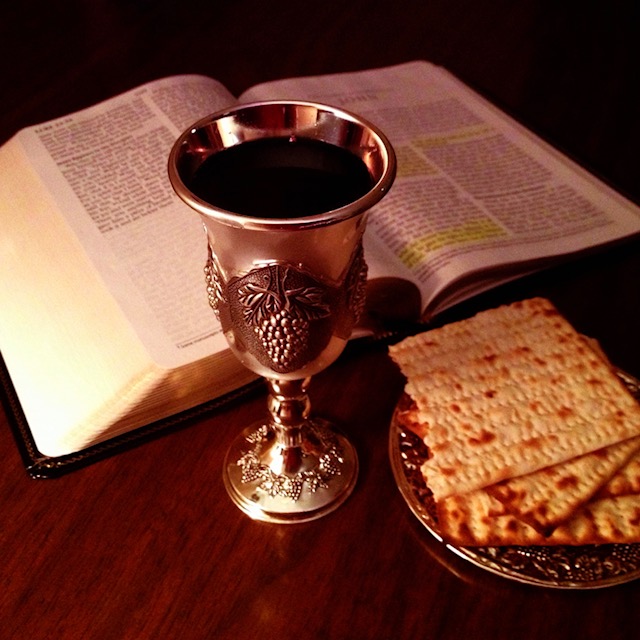 “It’s really about the authority of scripture.” “Your interpretation undermines a high view of scripture.” These talking points are at the core of many arguments around the Way Forward. In light of this rhetoric, I want to think through the issue of hermeneutics (the system we use for interpreting the scriptures) and reflect upon how we might do this in a Wesleyan way. (It is a longer than usual post).
 Connected In Christ