
Here are some quick responses if you ever get caught sleeping on the job. “They told me this might happen after I gave blood this morning.” Or, “I wasn’t sleeping; I was meditating on our mission statement and envisioning new possibilities for implementation.” Or my favorite, “In Jesus name, Amen.”
After devoting attention elsewhere in the midst of a pandemic, I have recently been reawakened by renewed conversations about the future of the UMC. I’ve also discovered that some have been wide awake all along. This week, I watched a presentation by Tom Lambrecht, from the WCA, that was very similar to a presentation given in Arkansas last year. In this one, however, there were more details about the start of a new denomination, with or without the approval of the next General Conference, and included strategies to invite whole annual conferences to join. Can you imagine that coming up at Annual Conference?
The narrative is alarming – and wakeup worthy. In this narrative, matters of sexuality are only the “presenting issue.” The real issue is that too many no longer see the bible as God’s self-revelation but see it as “a record of human encounters with God,” as “helpful but not authoritative.” With each step, we are warned against those who see the quadrilateral as “four equal sources of authority.” We hear of those who do not want to limit marriage to two people, ignoring the fact that the plan mentioned uses the word monogamy repeatedly. Adam Hamilton is misrepresented as an example of one who “knows good Christians who are gay” and thus “elevates experience over scripture.” The conclusion is this: the faithful simply cannot stay in a church where so many “discount biblical teaching in favor of human experience and give priority to cultural values over scripture.”
As I listened, I wondered who was being talked about. The people I know, who are being lumped into this category, would agree that scripture is primary and authoritative. Their convictions are deeply rooted in scripture, believing that faithfulness calls us to move beyond proof-texting and invites us to follow the method of interpretation that Jesus used when he summarized all the law and the prophets through the lens of love. It is attention to scripture that motivates a desire to make room for all, including those with traditional, centrist, and progressive perspectives. It is a deeply rooted faith in Jesus Christ that leads many to seek unity in love rather than uniformity by law. And in the light of the “presenting issue,” and the harmful rhetoric around it, many feel an explicit need to affirm our LGBTQ+ siblings and to honor the gifts they bring. In this light, there is a need to promote a sexual ethic rooted in the life-giving values of the gospel rather than judging people by how they personally identify themselves.
To characterize these commitments as giving priority to cultural values over scripture is unfair and hurtful. At best, this characterization involves the fallacy of hasty generalization or the taking of an isolated or extreme example and using it to cover others; at worst it is an intentional lie to vilify and mislead! Of course, if schism is the goal then looking for good in the other is probably not a good idea. With this goal, we may not want to start with common ground.
Friends, the alarm is going off. At one of these meetings in Arkansas, available on the WCA Facebook page, a pastor said that the most important vote of our lifetime is coming, that small churches will be the key to success, and that funds are available to help pay expenses to help delegates get to Annual Conference when the time comes. Do we need to wake up? Do we need to resume the work of cultivating a different narrative? The option may be waking up and finding ourselves in a new denomination.


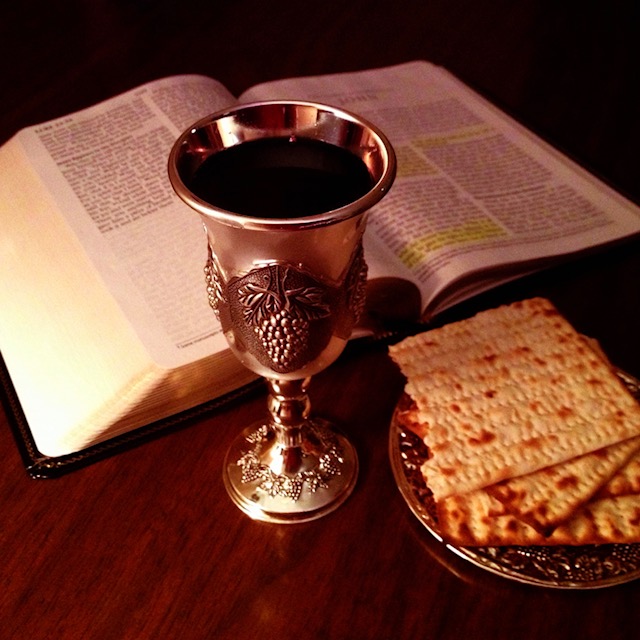 Our Bishop and Appointive Cabinet have given permission to practice alternative forms of Holy Communion where we “extend the table” through the distribution of pre-packaged elements or inviting participates to provide their own elements during a “live” gathering via Facebook or Zoom. I am thankful for these guidelines as we all seek to do ministry in new and creative ways. The guidelines given, however, focus more on logistics than on theology, which has led me to some needed reflection. Not “can we”, but should we practice online communion during this time of social distancing? How might this distort our understanding of the sacrament or cause unintended consequences?

 The pressure is on! As a delegate, it was clear that we were the target audience of the first live-streamed presentation from the group giving us the Protocol, aired yesterday. Scattered throughout the conversation were statements about this now being placed in our hands. There were pleas to join the movement. It was repeatedly emphasized that this protocol received unanimous affirmation after an intense mediation process. Everyone at the table was willing to compromise for the sake of good-will, peace, and the hope of moving forward. Much motivation came from the shared assumption that the alternative would be much worse. In fact, the word “catastrophic” was used at least twice for what would happen if this does not pass. So once again, the pressure is on.
 In response to leaders among us who have formally rejected requests for a moratorium on charges and trials based on the measures passed at the last General Conference, I sta
