Naming Samaritans (and why this is relevant in our current cultural/religious tensions)

“Why do we need to point out people’s ethnicity or sexuality?” “Why can’t we just say that we welcome all people?”  I’ve had this conversation recently and found it helpful to remember how Jesus called attention to particular identities – Samaritans, Gentiles, Women, Eunuchs. In all of these cases, the purpose of naming these identities, is not to push a “Samaritan Agenda,” (or fill in the blank with the other identities); the purpose is to stand with those who have been harmed and to go the extra mile in honoring them as beloved children of God – and to put these two purposes together in a way that illuminates the calling that comes from God through Christ.  

To use the term “Samaritan” as an illustration, we see multiple examples of this counter-cultural calling. In the famous parable of the Good Samaritan, we are given an example of how we are all to be good neighbors (Luke 10:25-36).  It was shocking to the religious ones who heard the parable. In the story of ten persons being “made clean” with only one returning to give thanks, we are directly told that this one was a Samaritan, and he became an example of not only being made clean but also being made well or healed. (Luke 17:11-19). 

To the shock of even his disciples, Jesus takes time to talk to a Samaritan woman at a well.  She becomes the first preacher, we might say, and many believed because of her testimony (John 4:1-42). And she is just one example of Jesus honoring women and giving them a place and a voice at the proverbial table (See Luke 8:2; 10:38; 23:55; Mark 7:24-30; John 4:39; Acts 1:14, 2:14-17, 8:12, 9:36, 16:14-15, 21:9; Rom 16:1; 16:3; Phil 4:2; Gal 3:28; and more).   

At one point Jesus is called a “Samaritan” and it is not meant to be a compliment.  This is followed by the accusation that he has a “demon within him.” This accusation occurs in a conversation with religious leaders who firmly believe that God is on their side. Jesus makes it clear that this practice of using religion to divide and judge only serves the “father of lies.”  (John 8:39-58).  

This big lie can be illuminated by what John Wesley called the “wildness of enthusiasm.”  In this condition, we confuse our own opinions and biases with the will of God.  In another place Wesley uses the term “bigotry” to describe this big lie.  He defines bigotry as an extreme attachment to one’s own party, opinion, or religion to the point of causing bitterness and division, often in the name of God.  Jesus names particular identities in the hopes of challenging this evil among us. 

As we address the religious tensions among us today, naming particular identities is challenging. Accusations of bias and bigotry flow from multiple sides.  It is true that Jesus treated all with honor and respect, wanting all to know God’s love and to be able to live into this love.  In this light, the scriptures make it clear that we are all one in Christ and that God shows no partiality (Gal 3:28; Acts 10:34).  And, from the other side, the scriptures also name particular identities, not to promote what we might call “secular agendas” but to call attention to the sin that divides and demeans, often in the name of God.  In Christ, both of these approaches can be true, for biblical truth is that which reveals love and opens the way for true togetherness. In the spirit of grace and truth, we can hold both of these perspectives together. (Alethia – John 17:17; I Cor 13:8; Eph 4:1-16; Col 3:5-17).  

My hope is that this analysis will help us all make good decisions about how to be more welcoming. How can we go the extra mile in showing Christ-like love and cultivating opportunities for all to grow in this love, without putting up barriers that get in the way?  May we find the courage to do this well. 

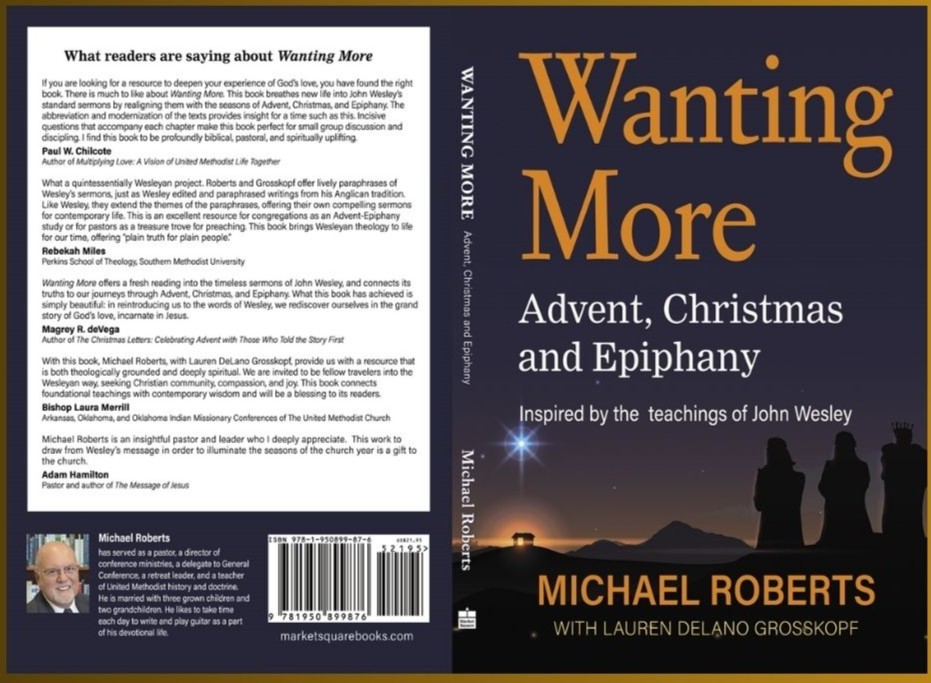
Wanting More (a reading challenge starting with Advent)

If you would like a reading challenge, I would suggest getting acquainted with John Wesley’s sermons.  These sermons are a part of our doctrine and have the power to inspire and guide us into a new season of faithfulness – as individuals and as a church. 

With this motivation, I suggest this series that starts with Advent and goes through the liturgical year.  In each chapter there is a paraphrase of one of Wesley’s Sermons, a devotion on the same theme, and resources for reflection.  In terms of scholarship, one thing that makes this series attractive is the way Wesley’s sermons have been rearranged to fit within our regular liturgical rhythms.  We can truly go through the year with Wesley in a way that connects us to worship and to the seasons of our lives.

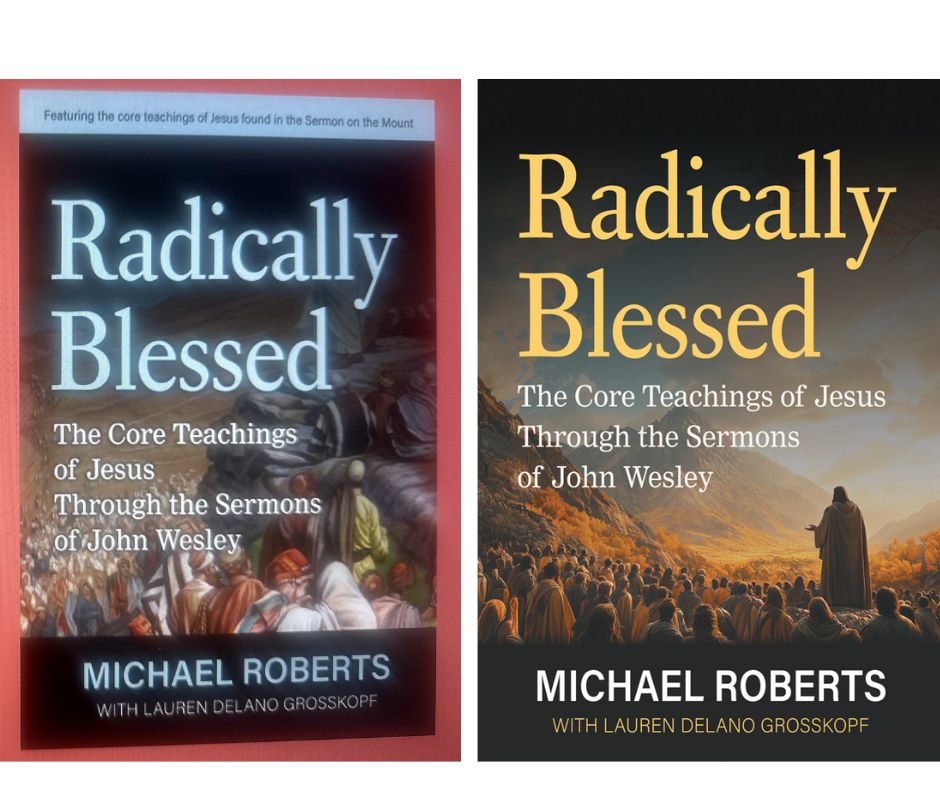
The journey starts with Wanting More: Advent, Christmas, and Epiphany Inspired by the Teachings of John Wesley.  The next book, Awakening Through Wilderness takes us through Lent, Easter, and up to Pentecost.  The third book – Radically Blessed – takes us through the sermon on the mount.  And a fourth book will be coming out for the Fall focusing on practical divinity. The title will be Heart to Holiness. 

As we move into a new season of faithfulness and hopefully fruitfulness, spending some time in our roots and history may be an important key.  I believe this is true. 

Give it a try.  There is a sample of the first book on Kindle.  Or it can be purchased through Market Square Books, Cokesbury, or Amazon/Kindle. I pray that this will be challenging, inspiring, and will help you and all of us bear good fruit into a new season. 

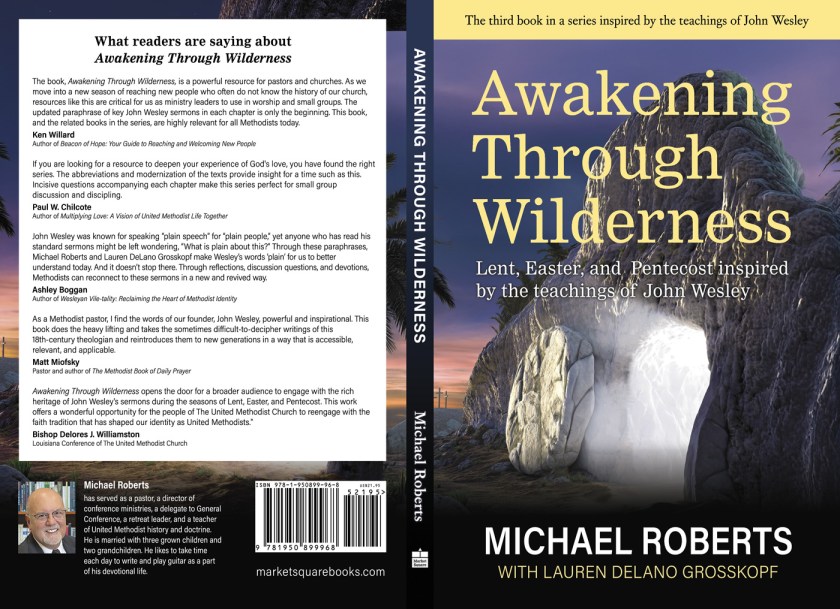
Awakening Through Wilderness (a devotional possibility for you and for UMCs)

No doubt we are moving into a new season in the life of the church.  In order to navigate this reality, I am convinced that we need to look into our past as much as we look towards the future.  Or maybe a better image is the need to attend to our roots in order to branch out and bear good fruit. 

With this motivation I, along with Lauran DeLano Grosskopf, have written a series of books where each chapter contains a paraphrase of one of Wesley’s sermons, a devotion on the same theme, and resources for reflection.  With this series, Wesley’s sermons have been rearranged to fit within the liturgical year, thus connecting them to our weekly rhythms.  My hope is that these resources will help us reacquaint ourselves with inspiration from our past and lead us to good fruit as we move into a new season as United Methodists. This would be a good way to go through the year with Wesley.

Below is a brief description of the latest book from the publisher. Within the book there are testimonies from Paul Chilcote, Ashley Boggan, Bishop Deloras Williamston, Ken Willard, Adam Hamilton, Bishop Laura Merrill, Rebekah Miles, and more.

  “Awakening Through Wilderness invites readers on a transformative journey through Lent, Easter, and Pentecost, exploring timeless truths through the voice and vision of John Wesley. This third installment in this acclaimed series builds on previous works, Wanting More and Radically Blessed, continuing the mission to make Wesley’s foundational teachings accessible and deeply relevant for today’s church.

 In this book, each chapter offers a devotional paraphrase of one of Wesley’s classic sermons, followed by a modern devotion and practical questions for reflection. Each chapter masterfully connects Wesley’s original passion for renewal and reform with the liturgical rhythms of the church year, guiding readers through themes of fasting, self-denial, temptation, grace, and resurrection.

 The wilderness becomes a powerful metaphor for life’s trials, doubts, and spiritual dry seasons-those times when God seems distant and faith is tested. Through Wesley’s insights and pastoral reflections from Michael and Lauren, readers discover that the wilderness is not merely a place of hardship but also a space for awakening, transformation, and renewed purpose.

 Whether read individually or used in a group study setting, Awakening Through Wilderness offers a clear, engaging path for spiritual growth. Each chapter’s discussion questions and reflection resources make it ideal for small groups, Bible studies, or personal devotion, especially during Lent.

 The books in this series are written with warmth and clarity, drawing on deep knowledge of Wesleyan theology and a pastoral heart for today’s church. Throughout we are reminded that “God’s love comes to us on its way to others,” inspiring readers to grow in grace and to live out their faith with courage and compassion.

    You are invited to step into the wilderness and emerge awakened to the transforming power of God’s love.”

These books are available through Market Square Books, Cokesbury, and Amazon/Kindle. I would be honored if you would take a look (you can get a sample through kindle) and if you feel so led, share these resources with others.  If you would like to talk about this, please know that I would love to have that conversation.  Many Blessings!

Methodism Exposed (exploring the real method that leads to life)

The word “exposed” is meant to be provocative.  Other terms would be “revealed” or “illuminated.”  Going back to Wesley, a lot of misconceptions have existed around the use of the word “method” in Methodism.  Its deeper meaning is often lost.

The method of Methodism is often defined as the disciplined and intentional practice of the Means of Grace – prayer, worship, searching the scriptures, conferencing, service, etc.  There is truth in this, but we miss much inspiration if we stop here. [i]   While Wesley does give praise for the Means of Grace, he balances this praise with strong warnings. We can engage in all of these practices, and they can still sink us into a living hell.  The Means of Grace can be more of a burden than a blessing. They can lead us into the form of religion without the power.  This happens when we turn the “means” into the “end,” and begin to think that faith is found in the practices themselves. [ii] (For more see the notes below)

When Wesley uses the term “method” he most often speaks of the method that God uses to bring us into life.[iii]  Wesley describes God’s method with the word “reconciliation” in one place.  In another place, we are told that Jesus is God’s method for healing souls that could never be healed by human endeavor. The outcome of God’s method is the renewal of the image of God within us.

In more than one place, Wesley gives us an outline of how this method typically works. [iv]    The first step is an awakening in the soul to the mystery and reality of God. This awakening often starts with fear.  We recognize our sin and how short we fall from the glory of God.  How can we ever be justified – in alignment and harmony with God?  How can we ever be saved?  This fear often leads to attempts to justify ourselves.  And these attempts always leave us wanting.  When religion is defined in this way, we only bring God down to our level.  From here, we are led into the heart of God’s method. We are awakened to God’s eternal love and this changes everything.  It leads us into a desire to practice the Means of Grace, along with disciplined and daily self-examination, with the hope of being transformed, from one degree to another, into the very image of Christ and Christ’s love. This is a way to describe the method that God uses to bring us into life.[v]

And now, here is a more poetic way of describing God’s method, using a Charles Wesley hymn as inspiration:

This is how it works. 

Love comes first.

It opens our heart to a new reality. 

We sense that we’re a part of something bigger than ourselves,

And more than any finite thing.

This love works to pave the way

And plants the seeds of living faith. 

This is how it works. God’s love comes first

And it leads to,

A faith that works by love, a faith that works for love. Love!

This is how it works, our hearts are changed;

We turn towards life-giving grace.

We sense that heaven has begun in us,

And new life has been won. 

This love works to make us whole,

And forms the Savior in the soul.

This is how it works. God’s love comes first. 

And it leads to,

A faith that works by love, a faith that works for love.  Love! 

(Lyrics to a worship song entitled, “Faith that Works for Love,” inspired by the Hymn “Let Us Plead for Faith Alone.”  For a version of the song, additional verses, and commentary on how this method contrasts with other understandings of faith, see Hymn Inspired Worship Songs, YouTube, Michael Roberts. This was a part of my pandemic project)


[i] It is worth noting that Wesley does not tie the word “method” to the Means of Grace. In the sermon on the Means of Grace, for example, no version of the word “method” or “methodism” is found. 

[ii] Moving in the other direction, in Wesley’s famous pamphlet entitled “Character of a Methodist,” he does not directly talk about the “means of grace” or focus on what we do.  In fact, he says that our “schemes of religion” are “quite wide of the point.”  For methodists, faith is so much more than “just believing” or “accepting” what God has done for us. A methodist is one who has been awakened to God’s love.  In faith, we give ourselves into this love.  The experience of this love leads to peace with God and this peace leads us to “abound in love and in good works.”  To paraphrase Wesley, “Methodists are those who think, speak, and live, according to the method laid down in the revelation of Jesus Christ. Their souls are renewed after the image of God, and in all true holiness. Having the mind that was in Christ, they walk as Christ also walked.” 

[iii] Key sermons from Wesley on this topic include Righteousness of Faith where we read of God’s “method of reconciliation.” In the sermon Original Sin we hear that Jesus is God’s method for healing souls that could never be healed by any human endeavor.  Through Christ God heals our “functional atheism” by giving us faith – that divinely given conviction that God is with us and that nothing can separate us from God’s love. This leads to repentance, to trust, and transformation into the love of God. In the sermon Laying the Foundation we hear, once again, that methodism is not a new religion. It is the restoration of the image of God, centered in love, which is the summary of all the law and the prophets. Methodism is about intentionally cultivating the blessings of love, joy, and peace in the Holy Spirit.  It is not rooted in orthodoxy of opinion.  In this sermon Wesley speaks of this divisive temptation and then gives thanks for being delivered from this misguided zeal. God’s method is never meant to lead to the arrogance of spirit that causes division and harm within the Body of Christ. In the sermon Use of Law we hear that the ordinary method of God is to first convict us of our sin and our need.

[iv] God’s method involves movement along the Way of Salvation. This movement is described often with the key terms of Justification to Sanctification (and later others built upon what Wesley said about Preventing Grace and added Prevenient Grace as a way to describe the movement of God in our lives).  In another place, this movement is described with different States of Being in which we may find ourselves.  In our Natural State there is a false peace with no thought of God.  This can lead to a Legal State, where there is no peace at all. Next is the Evangelical State or the State of Love where we experience the peace of God. 

[v] Perhaps more than practicing the traditional Means of Grace, (or perhaps at the heart of this practice) we participate in God’s method through disciplined and regular self-examination.  Wesley consistently posed questions to the people called Methodists, calling for daily reflection. Is heaven in your heart? Is your heart being transformed into the likeness of Christ? Are you growing in holiness, defined by the virtues of patience and kindness and a humility that does not insist on its own way? Are you attending to the means of grace that will open the way for this love? Are you becoming less judgmental and more compassionate?  Do you know the peace of God?  Do you let other theological/political matters distract you from our core purpose? Do you understand that the narrow way leads us into the wideness of God’s mercy and the wide way of the world leads us into narrowness of spirit? These are the kinds of questions that Wesley posed over and over again as a way for us to participate in God’s method.

Wesley on Human Sexuality – Part Two

It was a modest project – to look directly at Wesley’s notes on the passages that are often used and to see what he had to say.  I was not expecting to find some of the things I did. With all the attention the previous post received, I want to look again, in light of some of the comments, and ask if my conclusion needs to be modified.

Concerning Wesley’s notes on Romans 1:26-27, much more can be said. Wesley speaks of three degrees of ungodliness – uncleanliness (v.24), being given up to vile affections (vs.25-27) and the vilest abominations (vs.28-31).   The word “abominations” is reserved for his long list that includes envy, deceit, covetousness, gossip, and fornication, which Wesley specifically used as a blanket term for all “pornia.”  Under the second category of “vile affections,” Wesley’s illustration is the “heathen Romans…and none more than the emperors themselves.”  As a point of interest, he also speaks of “American heathens,” in the note on v.31.  Under this category, Wesley speaks of idolatry being “punished with unnatural lust.” The only other time “lust” is mentioned in his commentary on Romans is in the note on 7:7 where it is specifically defined as “evil desires.”  Once again, we can conclude that Wesley wants to point us beyond sexuality only. 

Referring to Wesley’s note on I Cor 6:9-10, I can state it even more emphatically. Wesley wants us to think beyond sex!  He struggles with the word translated as “effeminate” or “soft.”  He gives this definition – those “who live in an easy, indolent way; taking up no cross, enduring no hardship.” At the same time, he does address the type of person that people would have had in mind. He asks, “How is this? These good-natured, harmless people are ranked with idolaters and sodomites!  Wesley has trouble with this group being on the list – whoever he had in mind.  I included more commentary in the previous post, making sure I didn’t make too much of this or impose too much of a 21st century perspective.  With statements like this, I do wonder how this matter can rise to the level of schism.

Referring to Wesley’s note on I Timothy 1:8-11, Wesley gives no commentary on the word “sodomite.” Here I did have to look in other places.  There are a handful of mentions in the Notes. When he elaborates beyond an assumed definition, he points us beyond sexuality.  He equates this word to idol worship (2 Kings 23:2), to corrupt principles and practices of government (Deut 32:32), and all things abominable (Rev 21:8).  In addition to this, he elaborates on the sin of Sodom in his note on Ezekiel 16:47, mentioned in the earlier post.  It is clear that sodomy is not good. It is also clear that we cannot project the sin onto a particular group of people.  Wesley wants us all to understand our complicity and involvement in sin as a step into a life-giving relationship with God.

I spent a lot of time on Wesley’s commentary on Matthew 19 in the previous post.  In the notes of this chapter, and in other notes mentioned, Wesley does have some thought-provoking things to say about eunuchs, including that we cannot always take the term literally.  In the context of current discussions, his words are remarkable – as seen in the previous post.

To conclude, I want to state my previous and modest conclusion with more fervor. ”Wesley’s willingness to struggle with these texts gives us permission to do so as well.” To state it another way, there is much room in Wesley for other perspectives. An honoring of perspectives is woven into Wesley’s larger corpus of teachings.  To paraphrase Wesley’s own words, a Methodist is not distinguished by this or that opinion or scheme of religion.  All of that is “quite wide of the point.”  I love that line! Methodists are to be distinguished by the love of God in our hearts.

Yes, there is room in Wesley.  The question is – is there room in the church? For you? For me? For us together in communion? I say “yes,” with Wesley among our guides.

Wesley on Human Sexuality (and his commentary on often cited verses)

Certain passages keep coming up in our conversations about human sexuality and the future (and possible division) of the church.  Since Wesley’s notes on the New Testament are a part of our doctrine, it might be good to know what he has to say.

One verse from Matthew 19 is often quoted to make a point about marriage. In this passage, Jesus speaks of marriage between one man and one woman, and how the two become “one flesh.” In context, this is an answer to a question about divorce.  The law of Moses gave “men” permission to dismiss a wife for most any cause. Jesus says that this is because of our hardness of heart and calls “men” to a higher standard, with some arguing that this call was given to provide more protection for the wellbeing of women. While Jesus honors this form of marriage in his illustration, the point of his answer, as Wesley says, is not about marriage; it is to speak against two things: polygamy and divorce.

And then things get very interesting. Even after lifting up this high standard, Jesus makes it clear that he is not giving a new law to be enforced. He tells us that not everyone can accept this, but only those who are given the ability to accept it.  Jesus shifts the conversation to those who are not called to marriage in this traditional sense. In this context, he speaks of eunuchs – some who are born this way, some who are made this way, and some who choose this way to glorify God.  The term “eunuch” was used in the ancient world as a euphemism for those who we might call “gay” today. Wesley does not make this connection directly but does tell us that we cannot always take this term literally.  He speaks of those who are eunuchs “by natural constitution, without their choice: to others by violence, against their choice; and to others by grace with their choice.” This is remarkable language, with much to ponder. (Also see notes on Acts 8:27, I Cor 7:7, and Dan 1:3). 

Jesus ends this challenging passage by saying, “Let anyone accept this who can.”  It is with this word that Jesus offers his teaching on marriage, divorce, and the honoring of those who do not, or cannot, enter into a “traditional” marriage.  These are all complex matters that call for much grace.

Next, we turn to verses within the first chapter of Roman that are often cited (Romans 1: 26-27). Wesley points out that this passage is about “abominable idolatries,” where people exchange the truth of God for a lie and worship the creature rather than the creator. The illustration is used of men and women exchanging what is natural for them for what is unnatural for them. From our perspective today, we might say that this is not healthy for any of us.  Whatever else we might say, the illustration is not the point or purpose of the passage.  It is about idolatry that leads to “the vilest abominations.” Wesley lists these abominations in his commentary – Injustice, Unmercifulness, Maliciousness (“a temper that delights in hurting others.”). Whispering (to “defame others.”) and Backbiting (speaking “against others behind their backs.”).  

In terms of sexuality, Wesley puts “fornication” on his list. The Greek word is “pornia” which can be defined as any sexual expression which objectifies self or others. As Wesley says, it is a term that “covers every species of uncleanliness.” By this understanding, this term includes much more than our common definition. In his notes on this passage as a whole, Wesley emphasizes the point that Paul is trying to make.  If we judge others, we only condemn ourselves (Romans 2:1).  This passage is about so much more than what we like to focus upon.   

Next, there are two other passages in Paul’s letters that are often cited, I Corinthians 6:9-10 and I Timothy 1:8-11.  In both of these passages we find a list of vices that do not represent the kingdom.  More specifically, we see a list of certain types of people who “will not inherit the kingdom of God” – as if they deserve it apart from God’s amazing grace. The lists include idolaters, fornicators, adulterers, male prostitutes, sodomites, thieves, drunkards, revilers, robbers, murderers, slave traders, liars, perjurers, and all that is contrary to sound teaching.  

The word translated as “male prostitute” in the NRSV, literally means “soft.” In Wesley’s bible it was translated as “effeminate.” This same word is used in the gospels to compare the “soft” or “luxurious” clothing worn by those in royal palaces with the clothes worn by John the Baptist (Mt 11:8; Lk 7:25).  In reference to sex, there is a history of this word being used to describe the passive partner, the effeminate (which was seen as a vice by many). In his notes, Wesley describes those “who live in an easy, indolent way; taking up no cross, enduring no hardship.” It is clear that Wesley saw this in a broader way. In other contexts, Wesley uses this same word in a positive light. He calls for a “softening of the heart” and for a “soft and yielding spirit.”  In his commentary of the phrase “Love is kind,” he describes “kindness” with the word “soft.” He also says that peacemakers are those who “quiet turbulent passions” and “soften the minds of contending parties.”  Being “soft” can be a good thing.

As a part of his commentary, Wesley does allude to the common use of this word to describe a particular kind of person. He asks, “How is this? These good-natured, harmless people are ranked with idolaters and sodomites!”  Whoever he has in mind, he struggles with them being on this list. To make sense of this he speculates that we must all guard against sins thought to be the least in order to secure ourselves from the greatest sins. With all of this, it is clear that Wesley sees this notion of “being soft” is a broader context, beyond sex alone, and he also calls us all to look in the mirror. 

The next word on this list is even more challenging. Translated as “sodomites” in Wesley’s day, it is a combination of two words, one meaning “male” and the other meaning “bed.” While very rare in ancient literature, it is mostly seen as a reference to abuse and exploitation of another. In some contemporary translations, it is used to denote the active partner in a same-sex (male) intercourse. In the history of translation, it has also been associated with pedophiles or abuse of boys or children (This is how Luther, for example, translated it).  There is evidence that Wesley defined this word in ways that move beyond sex. In Wesley’s notes on Ezekiel 16:49, he says that the sin of Sodom was “fullness of bread,” “excess in eating and drinking,” and Sodom’s refusal “to help strangers.”  Arrogance, gluttony, and laziness in helping the poor was the source of their fall. Following the message of the prophets, Wesley wants to remind us that “Their doings were abominable, but thine have been worse.” (Note on Ezekiel 16:47).  In other words, when we see this word, we cannot only think of “those people.”  On the whole, this term is used in the context of exploitive, abusive, neglectful, selfish, and harmful behavior, often seen in the context of sexual relationships.

In the last century, this word was sometimes translated with the term “homosexual.”  It is worth noting that this 20th century term was used to denote an official mental disorder.  It was often used to suggest practices that we would all consider “incompatible with Christian teachings.”  The American Psychiatric Association did not fully remove this classification and these associations until 1987.  Because of these associations, we have been asked to stop using this term. It is hurtful and undermines the hopes for a life of faithfulness and love found in many who might be labeled in this way.

According to Wesley, we are to interpret all scripture, especially challenging scriptures, through the grand truths that run through the whole, using passages that “take hold of our conscience.” (See note on Romans 12:6 and Sermons “On Charity and “On Laying the Foundation”).  Jesus himself used this method when he gave us the great commandment to love and called this the summary of all the law and the prophets. Wesley calls this love the “chief of all graces” and the “royal law.”  In addition to the Great Commandment, Wesley also turned to passages like I Corinthians 13 and I John 4 to serve as a lens through which to interpret the whole and be able to “rejoice in the truth.”  These passages express the “grand truths that run through the whole.”  

It is worth noting the connection between love and truth. Biblically speaking, truth is that which reveals God’s love and makes it known. The word itself means “to reveal” or “uncover.” Truth is not rooted in the law. In fact, sometimes the law covers up the truth.  Jesus himself dealt with this. Truth is revealed by love that is patient and kind and does not insist on its own way (I Cor 13:4-7). It is this love that invites all of us to struggle with our own perspectives and prejudices and to be transformed, from one degree to another, into the likeness of Christ. By the practice of this love, truth is made known through us. That is the Wesleyan way.   

 In my mind, Wesley’s willingness to struggle with these texts gives us permission to do so as well. His commentary opens the way for us to acknowledge that we do not fully understand matters of sexual orientation and identity and thus can approach such matters with less judgment and more compassion.  At the same time, we can affirm a strong sexual ethic rooted in the values that are life-giving for all – faithfulness, commitment, and all virtues summed up with the word “love.”  We can focus on these biblical values for all, rather than setting some aside by a different standard.  In this light, it is worth noting that Wesley consistently defined holiness with the virtues of patience, kindness, and humility.  May we all aspire to this kind of holiness and to the call to love one another well.

The Foundation of Methodism (A timely paraphrase of Wesley’s sermon “On Laying the Foundation”

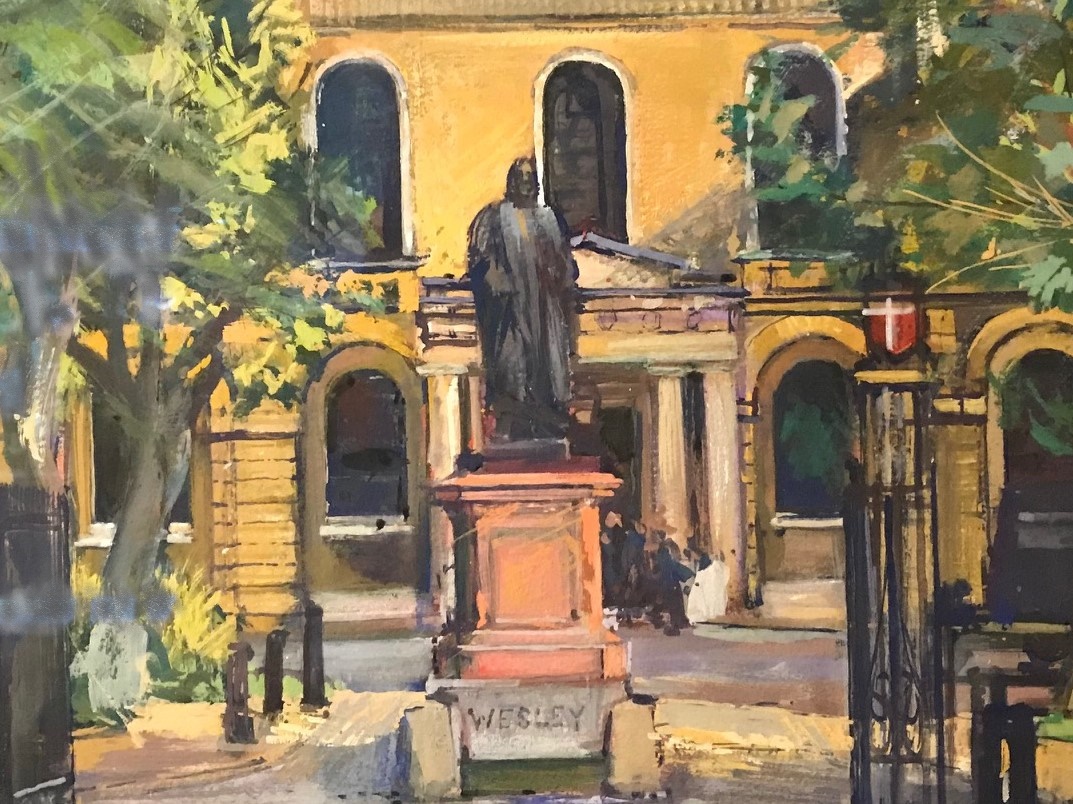
IMG_1851 (2)_LIHere is a paraphrase of the sermon John Wesley preached as the foundation was laid for a new chapel in London in 1778. It gives a powerful and timely summary of what methodism is all about. I visited Wesley Chapel in London last week and was moved, once again, by John Wesley’s consistent call to a higher unity within the church. Often the church has fallen short of this calling, but Wesley never gave up on the vision.  What might we learn from this commitment?

Number 23:23 –  “See what God has done!”

At the risk of appearing ostentatious or being called an enthusiast who confuses the Holy Spirit with their own ego, I want to give an account of the rise of Methodism from my personal perspective.

I start 1725, when a young student at Oxford was very much affected by Kempis’s “Christian Pattern,” and Bishop Taylor’s “Rules of Holy Living and Dying.” He was inspired to live by these rules and let them guide him. In time, others joined in this desire. Together we read scripture, prayed, and provoked one another to engage in good works. On this journey, we were orthodox in every way, firmly committed to the creeds and to the doctrines of the Church, as contained in the Articles and Homilies. The regularity of our gatherings led others to call us names. “Methodist” was at the top of the list.  It was an allusion to physicians who once flourished in Rome and, for us, was used as a term of derision and ridicule. In time, we embraced the term. But in the moment, we have no conception that this would become a movement.

The next key turn came in 1735 when my brother Charles, Mr. Ingham, and I were led to travel to the new colony of Georgia. Our purpose was to preach to the natives, but we found ourselves primarily attending to the spiritual needs of colonists in Savannah and modeling methodism for them.  While there, I was totally committed to the Church and to orthodoxy.  I even turned away a Lutheran pastor because he was not “episcopally ordained” and called on him to be “re-baptized” into the true church. Thankfully I have been delivered from this misguided zeal, where people are turned away from God so that we can feel good about our own faithfulness.

I returned to England in 1738, content to study in Oxford and bury myself in “beloved obscurity.”  But then God awakened my soul.  Along with others, I began to preach what some called an “unfashionable doctrine.” And yet, people came! Many were “cut to the heart.” Some came to me in tears inquiring what was needed to be saved.  I asked them to meet with me, and, without plan or design, the Methodist society was born. These societies, as renewal groups within the church, became places where people could help one another “work out their own salvation.”

That’s how Methodism began. But what is this movement about? What is methodism? We need to be continually reminded. Methodism is not a new religion. In fact, at its heart, it is nothing other than the religion of the primitive church, the religion of the Bible, and, I am confident, the religion of the Church of England.  It is the true religion rooted in love – the love that first comes to us from God, and so fills our hearts that we are then empowered to love others.

This love is the great medicine of life, the never-failing remedy for all the evils of a disordered world.  Wherever this love reigns, virtue and true happiness come; there is humility, gentleness, patience, peace beyond human understanding, and joy unspeakable. This is the religion of the Bible, as no one can deny who reads it with any attention.  Jesus declares this love to be the fulfillment of all the law and the prophets. It is at the heart of all we call “true religion.”

And yes, this love is at the heart of our Church. It is found in the liturgies and homilies. It is found in our prayers, so beautifully summed up in that one comprehensive petition that is said so often: “Cleanse the thoughts of our hearts by the inspiration of the Holy Spirit, that we may perfectly love you, O God, and worthily magnify your holy name.” As long as we hold to this love we can faithfully address all extraneous issues and varying perspectives within the larger church. Our diversity of perspectives keeps us humble and trusting in the real presence of the Holy Spirit to sort it all out. This sorting is not our work, but God’s work. In God’s love there is room for all, and together, and only together, are we able to practice the virtues of true holiness and grow in the grace of true religion.

In our beloved Church, many have been called, in this time, to preach repentance to sinners. Thousands have come to hear this word.   Many have been deeply convinced of their sins, their evil tempers, their inability to help themselves, and of the ineffectiveness of their outward religious practices. The love of God has filled their hearts and they have been led to love others with this same holy love.  God has called us to give witness to this work. May nothing else distract us.

This love that we preach must be free from enthusiasm – that zeal for our own opinions about things beyond the core of faith. Often in renewal movements, this misguided zeal finds its way into the body.  May this not happen among us. We do not put our stress on anything, as necessary for salvation, other than what is plainly contained in the word of God.  And of all things contained within the scriptures, we assess them in relationship to what Jesus calls the sum of it all – love of God and of our neighbor as a part of ourselves. (This is the chief among the “master-texts” by which we evaluate all revelatory claims, even those in scripture).

Likewise, this love must be free of bigotry. We refrain from all party zeal where our own opinions and allegiances to particular branches within the church cloud the call to unity and to bearing one another in love. We contend for nothing circumstantial as if it were essential to a relationship with God.  We do not seek to build “our” church by relying on violence and division.  We rely on no method other than reason and persuasion, while giving witness to the virtues of holiness – patience, kindness, and humility – and believing that the Holy Spirit really is at work.

No doubt, there have been other revivals that have led to division and polarization in the church. We have seen this among the Presbyterians, the Independents, the Anabaptists, and the Quakers. And after this separation they did little good except to their own little body. Bigotry grew between parties. And as a result of this lack of a higher sense of unity, the hope of general reform suffered.

And yes, there have been Methodist (so-called) who have gone this way as well, with Whitefield and Ingham among them. But, I want to be clear, this move toward division is a move away from the vision of methodism. When true to our calling, we will never form a separate sect but, in principle, always stay connected together within the Church.  When societies leave the church, our observation is that they swiftly crumble into nothing, having been uprooted from the good soil and nourishment of the larger community and from being a part of something bigger than themselves and their opinions about what is right. When we are planted in this rich soil of the larger faith, we are then able to bear good fruit – fruit that will last.

Therefore, whoever you are, I invite you to examine your own heart before God, rather than to occupy your time in judging others. Are you rooted in the love of God? Does your heart glow with gratitude to the God who loves you and gave his Son so that you “might not perish but have eternal life?” Are you bearing the fruit of this love? If so, then let us come together and magnify the Lord by establishing peace and good-will among us.   IF YOUR HEART IS AS MY HEART, GIVE ME YOUR HAND. Let us unite together in our desire for the restoration of the image of God in every soul.  Let us all give ourselves, not to contention, but to love and to good works; always remembering those deep words, (as God engraves them on our hearts!) “God is love; and those who dwell in love, dwell in God, and God in them.”  Amen.


Wesley and the Sin of Sodom (Part Three in the Series, Wesley and the Way Forward)

IMG_4576In this series, the next word from Wesley is “sodomy.”  Wesley uses this word in several places. While we often associate this word with sexual sin, and even homosexual practice, Wesley takes a much broader and more biblical view.  In Wesley’s commentary, he uses this word to describe abusive and harmful actions against others.  Wesley also uses the word “assault” to describe this sin.  At another point, Wesley expands the meaning by highlighting what is said about the sin of Sodom in Ezekiel 16:49.  In Wesley’s notes, he says that the sin of Sodom was “fullness of bread,” “excess in eating and drinking,” and Sodom’s refusal “to help strangers.”  Arrogance, gluttony, and laziness in helping the poor were the source of Sodom’s fall. That’s straight from the Bible!   In another place, Israel is compared to Sodom for their wickedness. This wickedness is defined as failure to seek justice for the oppressed, the orphan, and the widow (Note on Isaiah 1:9-17).  Following the message of the prophets, Wesley wants to remind us that “Their doings were abominable, but thine have been worse.” (Note on Ezekiel 16:47).   This broad and biblical view of the word gives us all cause to look in the mirror rather than project sin onto others.

In the list of sins found in I Corinthians 6, the original Greek word in question is “arsenkoitos.”  It is translated as “sodomy” by Wesley. (We also see this in the NRSV). There are no known previous usages of this word, so it is assumed by many that Paul coined the term.  The word is a combination of two words meaning “male” and “bed,” probably used with sexual overtones. Since there is no literary context for this word, it has been translated and interpreted in many ways. It has been used for men who use others as prostitutes or who use their strength (masculinity) to exploit others. It has also been defined as masturbation, pervert, abusers of boy or children, and with general words like “abominations.”  In the last century it has been translated with the word “homosexual,” thus associating this word with behaviors listed above. With this association, it is understandable why the word “homosexual” has become offensive to many, and is no longer used as a description of one’s identity.  By associating this term with abusive and exploitive behavior, it is “incompatible” with Christian teachings.

In more recent years some translations have combined this word with the previous word to describe the passive and active male (not female) partners in a same-sex relationship.  This move is problematic in many ways.  It veers from the original meaning of the words. It covers up the biblical and historical precedence for using this word to describe abusive and harmful behavior. It also removes the possibility of such a relationship being moral and life-giving. It makes it possible to use this passage against Christians seeking to live faithfully and to grow in the virtues of Christ through their relationship, perhaps with more commitment than those making the accusations. Is this biblical? Is it right? Is our judgment, and the call to accountability, in the proper place?

In any responsible reading of scripture, this word cannot be used to project sin only on to others or seen only in terms of sexuality.  Wesley would not approve.  When confronted with lists like in I Corinthians 6, the first calling is to self-examination. This list, for example, includes “fornicators.” Wesley uses this word to cover “every kind of [sexual] uncleaniness” and the harm that comes from it. The Greek word is “pornia.” It is sex when another is objectified or used, or when one allows themselves to be objectified or used, thus causing harm. I wonder if this would not be a better cause for us. This list also includes “drunkards.” At one point, Wesley speaks of being “drunk with the blood of the saints” believing we can judge others. The list is long, but the point is clear.  When we are “washed” and “sanctified” in the name of the Lord Jesus and by the Spirit of God, we behave differently.  We learn to live in love.

To avoid the labeling that makes it so easy for us to project sin onto others, I like the paraphrase of these verses found in “The Message.” It reads, “Those who use and abuse each other, use and abuse sex, use and abuse the earth and everything in it, don’t qualify as citizens in God’s kingdom. A number of you know from experience what I’m talking about, for not so long ago you were on that list. Since then, you’ve been cleaned up and given a fresh start by Jesus, our Master, our Messiah, and by our God present in us, the Spirit.”  Praise be to God.

RIGHTEOUSNESS AS THE WAY FORWARD (A Word from Wesley)

img_0502-1 The bishops’ commission has been named and people are talking.  I’ve read a few comments about the liberals and/or the conservatives on the list, as well as many prayers. My prayer is that this commission, and all of us, will be able to rise above the contention, and truly witness to Christ’s love for all. As you may know, I’ve been engaged in this project of reading Wesley to re-hear what he has to say about matters before us.  There is so much!  I would say that his use of the word “righteousness” is among the most relevant words for us today.

In his sermon “The Lord Our Righteousness,” Wesley starts by grieving the dreadful contests that arise among the body of Christ. He is disheartened by the way we can turn our “weapons against each other.”  For Wesley, the primary cause is attachment to opinions and modes of faith-expression which leads us to lose sight of our common faith and our common cause.

So, the question becomes, how do we rise above the evil fray? – and yes, Wesley does call it evil.  A glimpse of true righteousness helps.  In a long and involved exposition, Wesley says that true righteousness is found in the One who is the image of God for us.  In Christ, we see a reflection of who we are called to be.  At the heart of true righteousness is “love,” a word more fully illuminated by the virtues of reverence, humility, patience, and gentleness.   This understanding of righteousness stands in sharp contrast to the more common definition of justifying our positions as right over and against others.  True righteousness is rooted in peace rather than war.

In several other places, Wesley cautions us against those who are overly enthusiastic for their positions and are “righteous over much.”  Anytime we put our trust in ourselves and magnify our own ways as “right” for everyone, then we block the light of Christ’s righteousness rather than reflect it.  May this not happen to those commissioned to lead us forward.

In this sermon on true righteousness, Wesley stews over the broad diversity within the church of his day, focusing on differing denominational confessions and practices.  In the midst of much contention, he truly sees this diversity as an opportunity to give witness to Christ and to grow, if not in agreement, certainly in love. With great optimism, Wesley believes that it is possible for us to “take off the filthy rags” of our own righteousness and put on Christ, where we partake of the “same precious faith” even as we celebrate our diverse expressions of this faith.  I wonder, are we up for this kind of courageous witness?

Wesley also quotes “Mr. Hervey,” with words “worthy to be written in letters of gold:” “We are not solicitous as to any particular set of phrases. Only let [us all] be humbled as repenting criminals at Christ’s feet, let [us] rely as devoted pensioners on his merits…” Meeting on the common ground of Christ’s merits, and with the call to love by the virtues of true righteousness, there is no room for “contention about this or that particular phrase,” according to Wesley, or condemning others as “Antinomians” or law/covenant breakers.  There is no place for divisive or destructive “wrangling” over opinions and expressions of faith – not as we stand together as “repenting criminals at Christ’s feet.”  To count ourselves among such “contending parties,” says Wesley, is to be “an enemy of peace, and a troubler of Israel, and a disturber of the Church of God.”

In our current contention, there is much labeling of self and others, often in flowery and soft spoken attacks. There is so much “us-them” language, and talk of “winning” and “defeating.”  Is it possible for us to rise above the fray? The answer is, “Yes!”  We can “join hearts and hands in service to our great Master,” even as we “think and let think” on matters of opinion and practice. We can stand together as “repenting criminals” on the common ground of Christ’s righteousness, rather than our own, and we can truly grow in Christ’s love. I can’t help but believe that this is our time to embrace this identity and give such a witness to the world.

Patience As the Way Forward

phonto

“We’ve been patient long enough.”  “It is time to make a decision.”  These statements echo through our denomination.  Yet, into this kind of environment, John Wesley lifts up the word “patience.”  If we are to truly find a way forward, it may be very important that we let this virtue get through to our anxious hearts.

Wesley makes it clear that patience is so more than “waiting.”  It is certainly more than fear-ridden fretfulness, where we bury our heads in the sand, hoping a problem will go away.  Patience is a “gracious temper,” a fruit of the Holy Spirit. Patience holds the “middle way,” he says, staying in between the extremes. Even as we advocate for opinions and positions, Christians behave in the middle, staying connected to all with respect, humility, and compassion.  Standing on the solid rock of God’s love, we avoid “impatience with contradictions,” to use a phrase from Wesley.  We honor diversity of opinion as those who see in a “mirror dimly.”  We listen and learn. We embrace our differences as opportunity to learn how to love more fully and truly glorify God.  In this way Wesley characterizes patience as the “manifestation of the perfect love of God.”  That’s how important this virtue is. It is our witness to the world.

And now for the deep theological reason for placing patience at the heart of how we engage one another – instantaneous entire sanctification!  It’s not a phrase we hear every day, but it was key for Wesley.

Why be patient with ourselves and others? Because we are new creations in Christ.  From the moment our hearts were first opened to the saving love of Christ, a transformation happened and is happening.  Deep within, we have already been transformed “from inward sinfulness to inward holiness.”  Deep within, our “pride and haughtiness” have been transformed into virtue of true holiness – “calmness, meekness, and gentleness.”  With deep theological insight, Wesley warns against undervaluing what happens in justification.  Justification is so much more than a forensic pardon or act of blind grace — as in “oh yeah, you’re forgiven or “You have a ticket to heaven” — but with no real expectation of change.  In Christ, we are sanctified! And yet, from our vantage point, this sanctification comes in degrees, much like the growth of a child into maturity.  The key insight for Wesley is that we grow “into” this sanctification, not “towards” it. Our life becomes a journey of living into our new identity as “born again” children of God.

And so, we can truly be patient, with ourselves and others, because of what God has already done and will do.   We honor that! With holy patience, we learn to “not be angry at those who differ from [our] opinion, nor entertain hard thoughts concerning them.” We can give thanks for the way God is working in them, even if it is different from our desired timeframe or perspective. Our focus is ONLY this:  to see that this transformation “is wrought in our own soul, if we desire to dwell with God in glory.”

Wesley builds his sermon “On Patience” upon the words, “Count it as a joy knowing that the trails of your faith teach patience.”  (James 1:4). He points out that we are not saved from temptation.  In fact, we can count temptation as a gift. God works through patience to bring us to maturity in faith, where we learn that we cannot return evil for evil, barrier for barrier, or attempts to divide with more division.  In Christ, we find ways to bless even in the midst of such tension.

Impatience with others, or with the church, is a sure sign that we are off track in our journey. It is possibly a sign that we have reverted back to spiritual childhood, often accompanied with spiritual temper tantrums. We must be patient with even this, yet when we are in this state it is probably wise of the church to not give us a gavel.